Friday, June 1, 2012

Secure Social Media ?? Oxymoron?


Despite being social, Facebook has added a key component that will attract health professionals and patients to interact in private on Facebook.

Now that 0ver 85% of providers use some form of social media it is a fertile ground for inclusion in the health care digital revolution.

PR Web released news about Facebook’s new secure API.  The application by Registerpatient.com

Details on the Register Patient Facebook App for Physicians

Cost: Free feature included as part of RegisterPatient system
Functionality Specifics:
Application can be installed on provider’s Facebook page creating a HIPAA compliant secure patient portal with the following functions:
●    Secure online patient registration
●    Appointment Requests with real time appointment availability
●    Prescription refill requests
●    Secure patient to provider messaging

The announcement is timed perfectly for the upcoming announcement from HHS regarding inclusion of patient’s in digital eHealth for meaningful use stage II.

The application links directly to the provider’s RegisterPatient.com account and duplicates the same secure patient portal that can be installed on the provider’s website. Providers initiate usage of the Facebook application from within the RegisterPatient admin area and can complete the setup in just a few minutes.

This promises to give a large boost to use of social media. Registerpatient.com also has several other functionalities to enhance patient involvement and inclusion.

Social Media continues to be a brave new world.


Thursday, May 31, 2012

President Obama's former doctor claims that the president lacks passion, feeling and humanity by Jarrett Stepman

The Real Barak Obama.

by Jarrett Stepman of Human Events

In a revealing new book, The Amateur, (available at Amazon and on Kindle) author Edward Klein interviews President Barack Obama’s physician, Dr. David Scheiner, MD, who blasts the president’s health care plan and says that President Obama has an “academic detachment” that he could never break through.
The doctor fears that if the health care plan is “the failure” he believes it will be, because of runaway costs and other problems, then any health reform will be set back for years to come.
These are only a few of many reveals in Klein’s book, which makes the case that President Obama is not the political machine that people fear, but an amateur with a messianic complex who is completely out of his depth.

Stepman also covers other events during the writing of this book, which are very interesting. An encounter with the Clintons arguing about whether Hilary will run for the presidency at some time in the future, Bill’s summation of Obama as “The Amateur” which led to the title of the book. Chelsea weighs in on Obama’s win, and favored her father’s promoting the idea of Hilary running for President.  He also interviews Doulas Baird, former Dean of the Harvard Law School, and his sucessor, Richard Epstein. The two have differing appraisals of Barak Obama. Epstein saw him as a charismatic figure who excited students, but lacked legal substance, and never wrote a scholarly paper.

In an exclusive preview of The Amateur by Human Events, Obama’s longtime physician reveals the lack of humanity in Obama’s character and with which he enacted the entirely politicized health insurance reform, The Patient Protection and Affordable Care Act, often called ObamaCare.


Scheiner said that he believes the president miscalculated politically and that the health reform is ultimately doomed to fail. Worse, Scheiner doubts the character of a man who holds the highest and most influential office in America: “I think there is too much of the University of Chicago in him. By which I mean he’s academic, lacks passion and feeling, and doesn’t have the sense of humanity that I expected.”
The author, Klein, later in the book, compares Obama’s personality to early the 20th Century progressive president, Woodrow Wilson. By quoting the historian Forrest McDonald, who called Wilson’s perception of himself, “little short of Messianic,” Klein says that McDonald’s description of Wilson “fits Obama to a T.”
The Amateur is set to be released Tuesday, May 15. It is published by Regnery Publishing, owned by Eagle Publishing, which also owns Human Events.
In the chapter titled, “Hollow at the Core,” Obama’s former physician, who is a liberal, blasts the president for being uncaring, and perhaps worse, incompetent.
“He has no cost control. There would be no effective cost control,” said Scheiner. “The [Congressional Budget Office] said it’s going to be incredibly expensive… and the thing that I’m incredibly worried about is, if it is a failure that I think it will be, then health reform will be set back a long, long time.”
Scheiner said that the Obama administration neglected the advice of real physicians and instead decided to let political operatives craft Obama’s signature health care law. People like Obama’s former chief of staff Rahm Emanuel’s brother, Dr. Ezekiel Emanuel, were the kinds of medical people that the White House consulted.
“Ezekiel is a medical oncologist, not a general physician,” said Scheiner.
The point that Scheiner was trying to make is that President Obama lacks the ability to understand the critical role of the doctor to patient interaction just as he fails to connect to people personally.
“My main objection to Barack Obama is that he is a great speaker and a lousy communicator. He isn’t getting his message across to people. He isn’t showing that he really cares. To this day he hasn’t communicated with members of Congress.”
Scheiner and other interviewees in The Amateur believe that President Obama has been a failure as a president, that he has failed to live up to the hype and has left a trail of betrayals in his wake.

Although Obama and Scheiner did not have a close relationship, Scheiner was clearly upset by how he was cut off when Obama became president.
“Obama invited his barber to his inauguration—his barber! But I wasn’t invited. Believe me, that hurt.”

Dr. Scheiner (an old fashioned GP) who makes house calls, sums up the current Secretary of HHS, Kathleen Sibelius as a ‘joke’.

Dr Scheiner is himself a liberal and favors socialized medicine, in the form of Canadian health care, so no one can accuse him of being against total health care reform.  Given his leftist leanings one would expect him to be supportive of Obama’s vision for healthcare.  However he is one of his most severe and unforgiving critics.

What a different world it would be if Hilary Clinton had been elected President.

Wednesday, May 30, 2012

Breast density notification bill on its way to state Assembly

Misdirected Concerns prompt ill-advised regulatory bill in California  State Senate.

STOP THE INSANITY !

By Jason Green

Daily News Staff Writer

Posted:   05/29/2012 07:51:12 PM PDT

Updated:   05/29/2012 10:29:51 PM PDT

The California State Senate unanimously passed a bill Tuesday that would require women to be notified they have dense breast tissue if it is detected by a mammogram, according to its author, state Sen. Joe Simitian, D-Palo Alto.

Senate Bill 1538, which now heads to the state Assembly, would also force health care providers to explain that dense breast tissue can obscure cancer on a mammogram and to discuss the value of additional screenings.

Last year, similar legislation received bipartisan support but was vetoed by Gov. Jerry Brown. Simitian said his breast density notification law has the potential to save lives: Two studies from the first year of a similar law's implementation in Connecticut have shown a 100 percent increase in breast cancer detection rates in women with dense breast tissue who had further tests.

"My hope is that we can get to 'yes' this year and that we can begin saving lives as soon as possible," Simitian said in a statement. "This bill simply requires that information that is already shared between doctors also be shared with a patient herself. This is about a patient's right to know. It is about giving patients the information they need to be effective advocates for their own health."

Santa Cruz resident Amy Colton suggested the bill in 2011 during Simitian's "There Oughta be a Law" contest. The registered nurse and breast cancer survivor was never informed of her breast density during years of routine

mammograms and only discovered that she had dense tissue after completing her treatment for breast cancer, according to Simitian's office.

Dense breast tissue and cancer are difficult to tell apart on a mammogram because both appear white. A January 2011 study by the Mayo Clinic found that in women with dense breast tissue, 75 percent of cancer is missed by mammography alone.

An estimated one in eight women will develop breast cancer, according to the National Cancer Institute. The risk for women with extremely dense breast tissue is five times greater than the risk for women with low density breast tissue, according to Simitian's office.

If the bill is signed into law, California would join a growing list of states, including Texas and Virginia, with breast density notification laws. Congress and 15 states have similar legislation pending.

While well intentioned this is an unecessary state law and should be governed by the state medical board or board of radiology. This would increase costs to administer and enforce. (we need less government and governmental expense)

Email Jason Green at jgreen@dailynewsgroup.com.


Monday, May 28, 2012

More on Patient Centric Medicine


Not only do physicians, hospitals, insurers, need to become more patient centric but also device manufacturers as indicated by comments from implantable cardiac device manufacturers.

Ted Campos adequately describes how he wants access to data collected from a device implanted in his own heart.

TEDx Cambridge

Give me MY DATA!
Getting Health Data from Inside Your Body

Hugo Campos believes that patients with implanted medical devices deserve access to the data they collect.

I have this complex little computer implanted in my body, but I have no access to it," says Campos. "The best that patients can do is get a printout of the report given to the doctor, and that's designed for doctors, not patients. Patients are left in the dark."

Campos's goal is a new twist on the concept of open access, one that has emerged as implanted medical devices become more common and patients increasingly use wireless devices and smart-phone tools to track their health and take control of their care.

Campos, who talked about his efforts at a TEDx conference in Cambridge on Saturday, has approached both device makers and the U.S. Food and Drug Administration to try to get access to the data. But manufacturers have told him that the device is implanted to deliver therapy, not to provide information to the patient. And doing so is not part of their business model. He believes that because device makers see their primary market as physicians rather than patients, they are less motivated to make this information available to the people who actually live with the devices in their bodies.

And perhaps physicians should use only devices that patients can access their own data. That might change device makers ‘business model’.  After all the patient (or their insurer) is buying the device…..not the physician.

Pulmonary Artery Pressure Sensor for CHF


Sunday, May 27, 2012

Back To The Future of Social Media


By now you must be sick of reading about social media on the Health Train Express. However I have more reason than ever to believe social media will continue to gain ground in healthcare….Doctors love technology however are mostly late adopters. They like certainty and want others to  work out the quirks. That is how most of us were trained. Primum non nocere.  Whether this applies to social media, I cannot yet say but it appears to be going in that direction.  We saw it with HIT as electronic health records entered the user market as a consumer product rather than a techie experiment.  HIX is at that point now for hospitals.  Not many doctors or hospitals want to use a non-FDA approved drug.  So this pattern is well understood.

It has taken medicine close to 30 years to absorb practice management systems, then electronic health records for routine usage.

The pattern will be the same with social media. Social media will gain traction in general and health care, doctors and hospitals will repeat their pattern of late adoption.

In a study in Forbe’s Magazine:

“IBM Study: If You Don't Have a Social CEO, You're Going to be Less Competitive

When IBM (NYSE: IBM) conducted its study of 1709 CEOs around the world, they found only 16% of them participating in social media. But their analysis shows that the percentage will likely grow to 57% within 5 years.

Why? because CEOs are beginning to recognize that using email and the phone to get the message out isn’t sufficient anymore.

The big takeaway: That using social technologies to engage with customers, suppliers and employees will enable the organization to be more adaptive and agile.

Simply put, Physicians,  CEOs and their executives set the cultural tone for an organization. Through participation, they implicitly promote the use of social technologies.  That will make their organizations more competitive and better able to adapt to sudden market changes.

Other key findings of the study include:

CEOs are changing the nature of work by adding a powerful dose of openness, transparency and employee empowerment

Companies that outperform their peers are 30 percent more likely to identify openness – often characterized by a greater use of social media as a key enabler of collaboration and innovation

While social media is the least utilized of all customer interaction methods today, it stands to become the number two organizational engagement method within the next five years, a close second to face-to-face interactions.

More than half of CEOs (53 percent) are planning to use technology to facilitate greater partnering and collaboration with outside organizations,

CEOs regard interpersonal skills of collaboration (75 percent), communication (67 percent), creativity (61 percent) and flexibility (61 percent) as key drivers of employee success

  • The trend toward greater collaboration extends beyond the corporation to external partnering relationships. Partnering is now at an all-time high. In 2008, slightly more than half of the CEOs IBM interviewed planned to partner extensively. Now, more than two-thirds intend to do so.
  • CEOs are most focused on gaining insights into their customers. Seventy-three percent of CEOs are making significant investments in their organizations’ ability to draw meaningful customer insights from available data.

The IBM study shows that CEOs and the companies they manage must constantly evolve to stay competitive. Partners, suppliers, employees and customers want CEOs to communicate with them on a personal level to build trust and to help align them to the organization’s strategy. There is a lot at stake here. And if CEOs continue to hide in their Ivory Towers under the guise of some old command ands control mentality, the next chapter in their career might be written somewhere else.

You and I do not want to be left behind.”


This is becoming all ‘too true’ in the healthcare space as we are witnessing with accountable care organizations, past events with HMOs, PPOs, and the emergence of major health reform bills.


Monday, May 21, 2012

What do Physicians Know about Incentives?


$20B in incentives go to waste each year, says study

Not much according to  Healthcare IT News in an article by Stephanie Bouchard, Contributing Editor.

“As the healthcare industry continues to move in the direction of using compensation incentives, a new analysis reveals that incentives as currently used are not an effective motivator for healthcare professionals and waste an estimated $20 billion in resources. “

More than 75 percent of healthcare incentives are so small or poorly publicized that providers aren't even aware of them, according to a new study that suggests more than $20 billion in incentives may be wasted annually.


Health Care Providers and Incentives: What Works—and What Doesn’t


“While healthcare employers are offering their doctors and nurses compensation incentives, many of those health professionals were not aware of the rewards being offered or were not able to distinguish incentive pay from base pay, ZS Associates’ researchers found. One-third of respondents who did know about the incentives did not find them motivating.

The report makes four suggestions for improving incentive efforts:

  1. Increase the “at risk” component. Increase the amount of money that is truly at risk. If goals are not achieved, that will be reflected in the paycheck. That “at risk” amount needs to be greater than it commonly is currently, said Bernewitz, to get people’s attention.
  2. Sustain the signal. Instead of an annual summary of incentive payouts, provide regular summaries to increase awareness.
  3. Get the metrics right. Some incentive programs are so focused on metrics that the effect is to dilute the incentives, so employers should focus on a few critical outcomes and tie incentives to those, said Bernewitz.
  4. Communicate. Provide clear and frequent updates so employees can keep track of their goals and how they’re doing in achieving those through the year. Also give employees a chance to be a part of the incentive program design process.”

(author)SmileAs long as the metrics for incentives are correct and credible, physicians can buy into the new model for reimbursement. A key factor is reporting more than once a year, and perhaps quarterly.  The effects of change will not be apparent immediately.


Saturday, May 19, 2012

Improving modern medicine: Why social media is just what the doctor ordered


Alex Blau, MD, Medical Director at Doximity, is a graduate of the University of California San Francisco School of Medicine and trained in emergency medicine at Stanford Hospital and Clinics. He has been working in the emerging mobile health space since he was a senior medical student, when he founded MediBabble, an iPhone-based medical language interpretation tool now in use by more than 15,000 health care professionals. In addition, Dr. Blau has worked as a healthcare journalist, has been published in multiple journals and textbooks on emergency medicine, and has been an invited speaker at national conferences on early stage startups and innovation in

Improving modern medicine: Why social media is just what the doctor ordered

The potential is huge; but until very recently, physicians have been largely unable to take full advantage of what these connections have to offer. Specifically, the Health Insurance Portability and Accountability Act (HIPAA) of 1996 prevents doctors from using email or text messaging, much less open platforms like Facebook or Twitter, to communicate about patient care without risk of being fined or fired.

Still, the potential for physician-focused, web-based networks is huge, and HIPAA-compliant tools and sites have indeed started to take shape and populate.

Healthcare itself has been (often rightly) criticized as slow to change. In fact, Dr. Leslie Saxon recently published an insightful article on why the Internet hasn’t yet had any real impact on how medicine is practiced.

But research has shown that as far as technology goes, doctors themselves have proven to be early adopters. Having seen the kinds of conversations that have already begun to take place, I strongly believe that the future of digital medicine will be anchored in these kinds of connections.

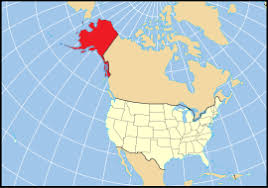
Think, for example, of the impact of having a rural doctor in Alaska be able to send pictures of a complicated emergency case to a former classmate now working at a stroke center in Boston — and getting real-time feedback. This is where, in my mind, social networking truly goes from entertaining to life-changing.
                

With physicians connecting in real time across specialties and beyond the traditional bounds of hospital walls, patients may soon be able to stop worrying about getting access to the right specialist.

Medicine’s brightest minds will be accessible from the remotest spots — on an airplane, at an underserved clinic, or in the thick of a disaster zone. Soon, any doctor with a mobile device will have the resources and reach to pull together a personalized, patient-specific team of experts for any given case. Sometimes, it will take as little as a question to the right expert in a sub-specialty to change the course of treatment for the better. In other instances, more lasting and meaningful collaborations might take shape.

Information itself is poised to travel differently, too. Facebook and Twitter are already showing us how effectively networked communities can transmit important data, and even bring obscure new ideas to the forefront of cultural debate.

For doctors, who have historically relied heavily on sifting through a surfeit of medical journals, this kind of hive-minding can help ensure that the most promising and thought-provoking research or techniques rise to the surface and reach a wider audience. Moreover, by posting, sharing, and commenting on articles and cases within their professional networks, physicians will become more active and engaged participants in the future of medical research and learning.

The existence of these large and overlapping communities of doctors promises to tap a goldmine of public health data. Using discussion threads about symptoms and outbreaks, the spread of infectious disease can be tracked automatically, as can the efficacy and speed of treatment plans. Complications of new therapies, previously unknown risk factors for common diseases, even entirely new disease entities may be identified from increased sharing of data that has until now lived in the filing cabinets and memories of individual physicians.

The social power of networks like Facebook and Twitter to connect, entertain, and enrich our lives is undeniable. It’s time to extend the networking paradigm to healthcare and reap an even more substantive set of rewards.

As a newcomer, Google plus and their unique video conferencing platform offers a ground breaking easy, and inexpensive video conference API (up to ten two way participants and live on air to an unlimited audience presents the opportunity for medical education.  On a one to one video hangout the opportunity to do a house call, see a patient for a post op visit, screen complaints and organize your time efficiently. Broadcast a surgical procedure on air with patient permission and some time delay with an expert physician moderator.  A prototype broadcast is available,

Live Broadcast Google Hangout Thyroidectomy


Survival

We talk a lot about fixing healthcare, but none of it matters if the people delivering care cannot survive the system themselves. More than ...