Wednesday, March 7, 2012

Hospitals Ineligible for Incentive Payments Lag Behind in EHR Adoption

The CMS incentive payment programs have a strange void and lack of funding for certain health care organizations that are a major part of our health system.

It is obvious that incentives are pointedly directed at primary care practices, since  the criteria for meaningful use have little application in many specialty practices, and would actually require redundant data entry for data that should be present in a patient’s file in the PCP practice.

In fact the original meaningful use metrics were manipulated to allow specialty practices to qualify for incentives.

Under the 2009 federal economic stimulus package, health care providers who demonstrate meaningful use of certified EHRs can qualify for Medicaid and Medicare incentive payments.


However, the incentive program excludes certain health care providers are such as:

  • Home health agencies;
  • Inpatient psychiatric hospitals;
  • Inpatient rehabilitation hospitals, Long-term acute care hospitals; and
  • Nursing homes.

The exclusion of SNFs is bizarre, since the medical record is essential when a patient becomes a resident for either a short or long term period in the SNF.

Hospitals that are not eligible for meaningful use incentive payments are less likely to adopt electronic health record systems, according to a study  published in the journal Health Affairs, AHA News reports (AHA News, 3/5).

Furthermore this absence of EMR in SNFs, Home Health Agencies will weaken linkage of vital information and undermine the importance of linkage to a health information exchange.

The researchers concluded, "To advance the creation of nationwide health information technology infrastructure, federal and state policymakers should consider additional measures, such as adopting health information technology standards and EHR system certification criteria appropriate for these ineligible hospitals."
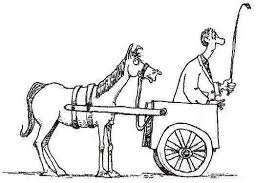
They also recommended that policymakers consider "low-interest loan programs for the acquisition and use of certified EHR systems by ineligible providers" (AHA News, 3/5).

And finally,  The Words I will try not to use in 2012


Social Media Office Visits and Mobile Apps

N.H.S. adopts mobile phone apps in lieu of office visit, or prior to office visit for instructions:

Checking in: Patients will be urged to take daily measurements and text them into a central computer system

An app a day keeps the doctor away: Patients told to use mobile phones for a check-up instead of visiting their GP  Cancer sufferers, pregnant women and those with diabetes, lung problems and heart disease will be urged to take daily measurements and text them into a central computer system.

The scheme is being rolled out by the Department of Health in the hope it will save the NHS millions of pounds through unnecessary visits to the surgery or hospital
Read more:

Ministers also believe that if patients are constantly keeping an eye on their condition they will be less likely to suddenly deteriorate and need to be urgently taken to A&E.
Read more:

But senior doctors and campaigners say it would be a ‘big mistake’ to force patients to use this technology.

They point out that certain groups such as the elderly would be far better off making an appointment than downloading an app.

You can guarantee that elderly people will not be able to use it or anyone else who isn’t very good with technology. If used wrongly it’s a big mistake.’

Would this work in the American Health System? Would it reduce cost? Would it overload staff with text volume. Are there any physician practices willing to pilot this as a test program?

I have expanded our vista on health issues on Google plus at “Digital Health Space” Contributors and participants are  invited, contact me at gmlevinmd@gmail.com or send a post to me at Gary Levin on Google plus.

Watch for the “Photo Walk Tour” which we have co-sponsored for patients who are immobilized and unable to travel about.  More on this later.

Technorati Tags: ,

Tuesday, March 6, 2012

Four Sacramento area counties prepare for early test of Obama's health care overhaul


In one of the nation’s first tests of how Obama care will work for the uninsured, the Sacramento region of California will implement a slice of President Barack Obama's health care overhaul.

All four Sacramento-area counties are joining a program that will insure tens of thousands of residents who have been without coverage, more than a year before federal health care changes kicks in.

For county governments and health care providers, the Low-Income Health Program is a chance to get a head start and work out some of the kinks in a new and complicated system – one that must emerge by Jan. 1, 2014, but remains largely unformed.

For new patients, the plan could mean the difference between getting sporadic care in unfamiliar clinics (or simply staying sick), and having something that resembles full-fledged health insurance, paid for in county and federal dollars.

This program fills a void until the Federal Low Income subsidy program kicks in in 2014.

Short-lived as it may be, the program will help counties ramp up their systems of care.

By New Year's Day 2014, the federal law says, most adults with very low incomes must be eligible for Medi-Cal. But they can't get started overnight.

Counties first need to vastly expand their corps of doctors' offices that accept Medi-Cal, establish standards and payment systems, enroll patients, and educate them on how to use the new system.

There are many factors remaining to be seen. What will the reimbursement rates look like?  Will physicians accept the new plans? Where will the primary care doctors come from when there is already a shortage of PCPs?

T.E.D. a Potpourri of Potential for Health Applications


Health 2.0 encompasses a wide variety of software applications that go far beyond mobile apps on  smartphones.

An entire new industry is developing around several ‘hotspots’ for technology development. This includes health care applications. One fertile ground is the MIT labs.  Progress and practical applications are only limited by venture capital.  Startup Incubators are a financial boost to new ventures whereby value-added resources are loaned (such as free space, equipment, furniture and promotional material) and/or also experience from a senior venture capitalist given to a hopeful entrepreneur.


A no-brainer for visually challenged individuals


Endless Possibilities for people with:

Impaired Vision

Limited mobility

Others:

Presentation software control from a podium.

Technorati Tags: ,,

Monday, March 5, 2012

Health and the Virtual Photo Walk


Virtual Photo Walk

A  photo walk by Jared in the Mountains of Utah for M. Monica on Google Plus using a Hangout with an iPhone.

Watch as John Butterill moderates a Virtual Photo Walk for two challenged patients.

Social interaction is a critical factor in health and wellness. Many of our patients have reached a state where they are no longer well, however suitable means are available to improve quality of life.

Google Plus has several ways of collecting individuals with like interests and/or goals.  The circles of  G+ offer a collective approach for individuals with common interests, ie photography, disability, disease categories, etc.

Virtual Photo Walks provides a platform for invalids to participate in observation of scenic walks, visits to theme parks, cruise ships, casinos and perhaps even city council or other political activities.

Digital Health Space has partnered with Google, Veterans Today, and Virtual Photo Walk in this endeavour for patient advocacy for a group largely lost to social affairs due to limited mobility or very limited access to public spaces. While the Americans with Disabilites Act empowered the mobility impaired in the physical space, Virtual Photo Walks extends this Act into the virtual space with a flick of a mouse pointer.

Saturday, March 3, 2012

EMR vs. Paper Records:


[INFOGRAPHIC]

Remarkable changes in attitudes by healthcare providers has occurred in the past three years, in regard to electronic medical records.  Physicians were the leading naysayers with many reservations about cost, true effectiveness and return on investment.  Now a significant number have become adopters of EMR and those providers who use EMR doubt if they could be as efficient without EMR.

Patient Opinions

About 18% of patients in paper-based practices said they would not find it very valuable if their physician adopted an EHR system, and about 10% said they would not find it valuable at all.

About 21% of patients whose physician primarily uses a paper-based health record system said they would find it very valuable if their physician adopted an electronic health record system, and about 52% said
Read more: 

When asked about the possible effects of their physician transitioning to an EHR system, about 48% of patients in paper-based practices said the transition would have a very positive or somewhat positive effect on their quality of care.

About 41% of patients in paper-based practices said the shift to EHRs would have no effect on their quality of care, while 10% said it would have a somewhat negative or very negative effect on patient care.

Read more:

The report is based on an August 2011 online survey of 1,961 U.S. adults, including 808 U.S. adults whose physician primarily uses a paper-based health record system.
Read more: Physician Opinions

Eighty-four percent of health care providers say they consider health IT "invaluable" or "valuable," according to a survey by CDW Healthcare, FierceHealthIT
Read more:

Among the 202 surveyed caregivers, CDW Healthcare found that:

  • 50% said they considered health IT "invaluable" because it "delivers capabilities that could not be replaced by non-IT tools;" and
  • 34% said they considered health IT "valuable" because it "significantly aids in the delivery of care."

In addition, 71% of health care providers said they would not be able to complete more than 50% of their workload without health IT

Read more: Health IT Professionals

Among the 200 surveyed health IT professionals, CDW Healthcare found that:

  • 56% said they have deployed an electronic health record system in their hospital in the past 18 months (FierceHealthIT, 2/27); and
  • 48% said they have deployed a computerized provider order entry system in the past 18 months (CDW Healthcare report, 2/27).

In addition, the survey found that:

  • Nearly 80% of health IT professionals said the infrastructure to support health IT sometimes is implemented as an afterthought; and
  • 58% said they had implemented data storage, a server or a network program after adopting a new health IT system at least once (FierceHealthIT, 2/27).

    Read more:

    Social Media


    Health Train Express believes that social media platforms and their use is at about 2008 in comparison.  EMRs rapidly evolved and purchased  during the period from 2008 to 2012 with the promise of $ 18 billion funding by the U.S.Government.

    At first glance the medical market place for social media would seem to be much smaller than EMR, however given it’s popularity healthcare in  will fuel growth for the  space. Many medical equipment companies both in manufacturing and sales use social media daily. 

    Social media has evolved from Twitter to Facebook to Google plus.  With each iteration the capabilities of the platforms continues to expand.

    We will continue to follow healthcare and social media closely.

    Thursday, March 1, 2012

    Using Social Media, Digital Resources and Health 2.0

     How to Health 2.0 Your Patient Portal

    Using Social Media, Digital Resources and Health 2.0 to your advantage

    Time for all of us is precious and is one of those resources like finances that is limited.

    Fortunately many changes have occurred which increase efficiency in dealing with healthcare. Many of these improvements are on the patient side as well and the physician side of the equation.

    Let's categorize these

    Insurance:

    1. Search engines can be use to identify appropriate insurance policies for you and your family. Many insurance companies now operate a central source for different companies as well as programs that compare rates and coverage limits.

    2. Enrollment applications can and are processed online. Much of your medical history can be entered because the online sites are encrypted and private in accordance with HIPAA regulations.

    3. Insurance notifications and contact confirmation can be sent via email to confirm your application(s)

    4. In addition to receiving ID cards via regular mail, some companies will also send you a copy via email.


    Office or Clinic

        1. Online web portals are becoming omni-present. These may include patient education, search engines by doctor location or specialty.

        2. Not infrequently the web portal will contain significant information about physician's resumes, credentials, hospital staff memberships, office hours, and specialty interest.

        3. Appointment scheduling.

        4. Laboratory, Imaging result reporting online.

        5. It's not necessary to sit and wait in a reception area with patients who may have infectious illnesses. If you have a cell phone or a smartphone ask your doctor's office to send you a text message or a 'tweet' when they are ready for you. (even a phone call works).

        6. Bill payment online.

    Pharmacy:

    1.       Physicians now frequently use eRx a form of electronic transmission of your prescription to pharmacies. This eliminates errors due to illegible prescriptions. However, it is not foolproof and recent studies have shown significant errors still occur. Double check your prescription when you pick them up.. It is important to update your doctor as to where you want your prescription sent to for each visit.Many pharmacies offer automatic refill at no additional charge. Ask your local pharmacy for their requirements. It will save time, your prescription will be ready, you will not forget, and it will reduce effort.


    Survival

    We talk a lot about fixing healthcare, but none of it matters if the people delivering care cannot survive the system themselves. More than ...